
A lot of people ease their way into vegetarianism or veganism through pescatarianism. Pescatarians avoid meat and poultry products, but they still consume and enjoy fish and seafood. In the past, I used to eat fish and seafood despite eating mostly vegetarian. So many “mostly-vegetarian” people will eat seafood on occasion (sometimes as a treat and sometimes as a convenience), which is probably why so many non-vegetarians will say to vegetarians, “But you eat fish, right?”
Mostly, the choice to be pescatarian stems from two different sets of motivations. The first is the perception that fish and seafood are healthier than other animal products and offer great sources of protein. The second is that fish and other sea animals are “lower” life forms than mammals and birds, making them less subject to moral concern. Further related to the sense that we have less reason to be morally concerned about fish and seafood is the perception (which is often a misperception) that compared to farmed animals, they live their lives swimming around the lakes and oceans in their natural habitats right up to the moment they are caught, so their lives are on balance pretty good, just the sorts of lives they would be living anyway. Besides this, they are different enough from us that many assume they don’t suffer as much or in the same way as other animals that humans eat.
This week, Veganuary is focusing on their “choose fish-free” campaign, which I discovered after receiving an invitation late last week to participate in their survey about my experiences eating fish. As I said, I used to eat fish sometimes, though not enough that I called myself a “pescatarian” (I don’t know that it comes in degrees, but back then I considered myself rather to be “imperfect vegetarian”). When I became vegan in 2011 I gave up fish, having eaten it only once since then, towards the end of a trip to Tanzania in November that same year, when the context made me feel that insisting that my food restrictions be met started to feel precious and privileged (this might be a post for another day). Now I can’t even contemplate eating seafood of any kind.
The Veganuary resource page for their Choose Fish-Free campaign is really good. In general, the Veganuary site has great information offered in a direct way, presenting the facts to speak for themselves. For example, in their piece “The Problem with Fishing and Fish Farming,” they offer this description of what happens when fish are caught in the net of a commercial fishery:
Netting can capture tens of thousands of fish at one time, with animals becoming exhausted as they desperately try to outswim the net.
When the nets are pulled to the surface, those at the bottom are crushed by the weight of fish above them. The rapid change in pressure causes their swim bladders to overinflate, and their stomachs and intestines to be pushed out through their mouths and anuses.
Their eyes distort, bulge and can also be pushed out of their sockets.
The animals are then dropped onto the ship’s deck where those who are still alive will suffocate – a process that can take several minutes. Others, like tuna, are hoisted from the water with a hook, and killed by forcing a spike through their brains.
Despite an ever-increasing number of studies that show aquatic species can feel pain, there are no still welfare laws governing the slaughter of fish at sea.
—“The Problem with Fish and Fish Farming,” Veganuary
Based on that description, it doesn’t seem like the “kinder” option. Commercial fishing industries also pose issue for sustainability. For example:
- Habitat destruction. They note that 3/4 of fish stocks are over-exploited in the European Union. Bottom trawling destroys the ocean floor. The last century has seen a 90% decline in the tuna, cod, marlin and swordfish populations and a complete collapse of the North Sea mackeral population.
- Support for the meat industry. One third of wild-caught fish is for non-human consumption, including in the form of fish meal added to farmed animal feeds.
- By-catch. The nets sweep up everything in their path. By-catch is the unwanted fish and other sea creatures that get caught along the way and accounts for more than 20 million tonnes, or close to one quarter, of the annual haul. Among the by-catch: An estimated 300,000 whales, dolphins and porpoises die in fishers’ nets each year. Other species: sharks, turtles, starfish, sponges, and hundreds of thousands of diving seabirds.
Lest we think that fish farming is a solution to these problems:
- farmed fish are fed ocean-caught fish
- farmed fish escape and spread diseases to ocean fish. For example, sea lice cause hemorrhaging, inflammationm, and death, and have spread from farmed fish to wild fish stocks.
- Conditions on fish farms are crowded and filthy, resulting in stress-behaviour (biting off the fins, tails, and eyes of others) and in the death of one-third of farmed fish.
- Some practices, such as eye-ablation on shrimp farms to stimulate ovulation, are deliberate and cruel.
- Some fish farming industries, such as the Scottish industry, shoot seals in order to prevent them from eating the farmed fish stocks.
The article notes further concerns with respect to:
- Transport
- Slaughter
- Support for factory farming on land
- Research that indicates fish are smarter than we think (not that not being smart justifies being subjected to cruelty and exploitation)
There are some great alternatives to eating fish. I have three suggestions to get anyone interested started:
- If you love sushi, there is a world of delicious vegan sushi available, including vegan California rolls. You can buy it or make it at home (see my not-pretty but delicious attempt pictured above). I make mine with brown rice because that’s what I have on hand.
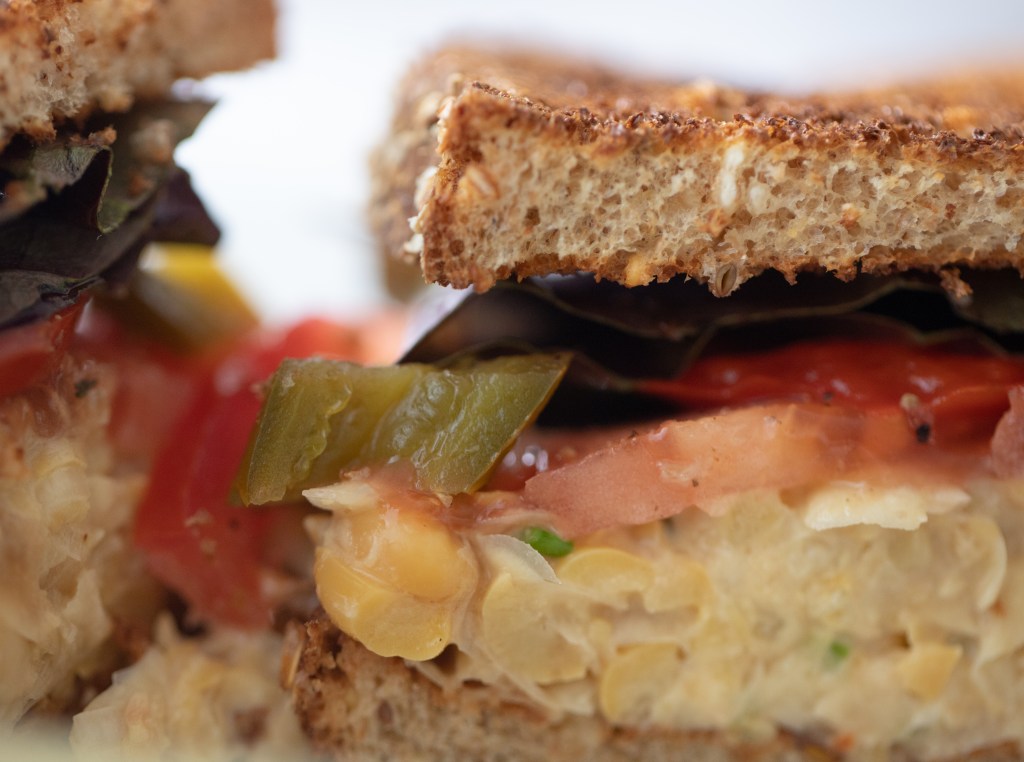
- Chickpea “tuna” salad sandwiches (suggestion: just take your favourite tuna-salad recipe and substitute chickpeas for the tuna, vegan mayo for the regular mayo, and add a few squeezes of lemon and about a teaspoon or less of soy sauce)
- Various frozen products, including my favourite, Gardein Plant-Based F’sh Filets. Pop a couple in the air fryer for a few minutes. While you’re waiting, mix up a bit of relish and lemon juice in some vegan mayo to make your own tartar sauce. Grab a bit of cole slaw on the side (and maybe some air fryer fries). Dinner.
There are a bunch of excellent resources on the Veganuary “Choose Fish-Free” page. If you’d like to know more about why it’s a great thing to try and not nearly as hard as you might think, I highly recommend checking them out.


Leave a Reply