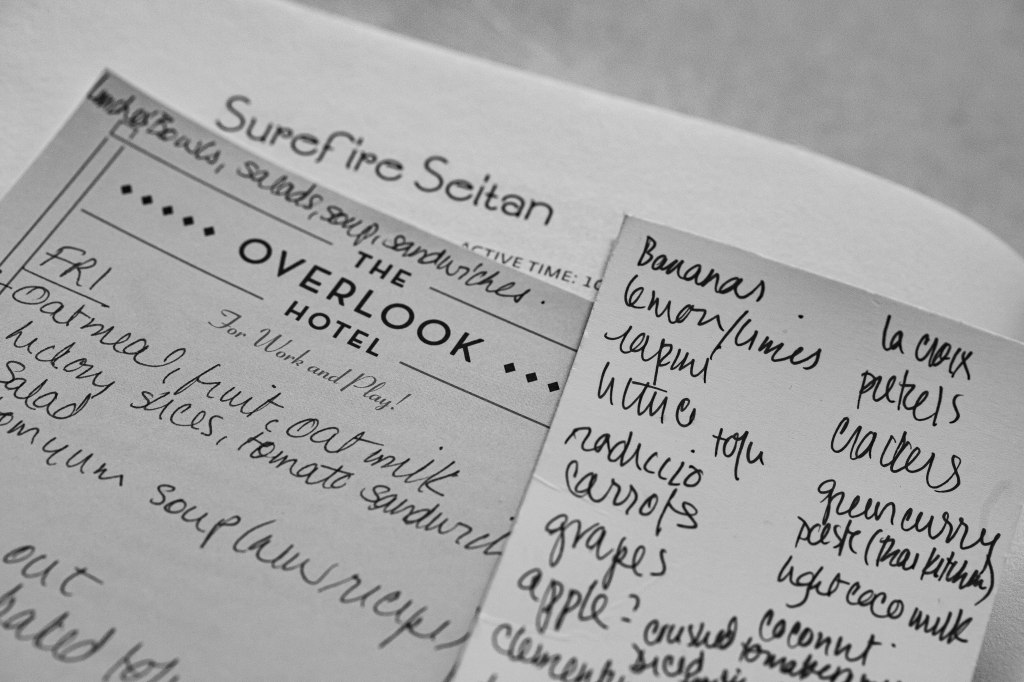
Sometimes the biggest obstacle to eating well (and by “well” I mean “vegan, nutritionally adequate, and tasty”) is not having ingredients on hand to support our efforts. I’m into easy planning. I am not the one who maps it all out in advance and sets Sunday aside for prepping the week’s meals. Instead, I have a rough idea of what I want to do for my breakfasts, lunches, and dinners for the coming week and I make sure I have what I need in my pantry, refrigerator, and freezer.
There are, of course, different ways to meal plan and they range in specificity from offering a very detailed meal plan, to providing general guidelines, to my way of have a rough sense of what the week’s meals will look like. In what follows I’ll talk about each approach and its pros and cons.
Detailed Meal Plan: Some people might do well to follow a pre-determined plan written by someone else. This is great if you’re really new to vegan eating and have no idea what to make. You can find this sort of thing online. PETA, for example, has a really delicious-looking two-week meal plan complete with recipes. It includes smoothies, avocado toast with garbanzo beans, and potato pancakes with vegan sour cream among the breakfasts; spicy kale soup, eggless salad sandwiches, and plant-based mac and cheese as lunch options; and spicy sesame noodles, fish-free sliders with mango slaw, and stuffed crust tomato basil pizza among the dinners. They include snacks in the plan, so it’s not as if it restricts you to three meals a day.
The Physicians for Responsible Medicine have their 21-day vegan kickstart program, which also outlines your meals and snacks for you. The app for this is great, offering grocery lists for each week, meal-by-meal planning, and recipes. Though I don’t follow the plan, I do have the app so I can access their recipes, which include things like Butternut Breakfast Tacos, Baked Macaroni with Cheese and Carrot Cauliflower Cheese Sauce, Beet Brownies, Cranberry Bliss Bites, Spiced Pumpkin Oatmeal, Smoky Brussels Sprouts with Shiitake Bacon, and Barbecue Style Portobellos. If you don’t feel like getting the app (which incidentally is free but you still might not operate that way!), the recipes are all on their website too.
The main “pro” for this sort of meal plan is that if you are new to vegan eating or just not interested in spending any time on meal planning, they do it for you. Obviously no one is watching over you with a stick, so you can deviate from the plan if you like. But if you are using the grocery list for your shopping, and you’re not a good improvisor in the kitchen, and you deviate much from the plan, then you’ll experience food waste. Which brings me to the main and perhaps only downside of this sort of approach: not enough flex. I’ve got a bit of a control streak in me when it comes to food, so I really don’t like it when someone else lays out for me what I’m supposed to eat in a week.
Whether these plans do or don’t appeal will depend entirely on who you are. If you like the idea of taking the thinking out of the picture and are happy to try new recipes and explore that way, they’ll work for you. If you’re more likely to want to go “off-plan” by eating out or just deciding that’s not what you feel like eating or cooking right now, then this kind of plan could backfire because you’ll have stocked up for recipes that never get made. If that’s the case, then the “general guidelines” approach to planning could work for you.
Following General Guidelines: This approach to meal planning is much less rigid, offering instead some guidance for how to approach your vegan eating so as to cover all the nutritional bases. The Vegan Society has a helpful page on meal planning that takes this approach. It’s also appropriate for people just starting out (and seasoned vegans who want to refresh their knowledge-base).
They suggest three steps: Research, Review, Plan. For Research they suggest informing yourself about some basic nutritional guidelines and they provide an easy checklist. They also link to their Vegan Eatwell Guide (a free PDF). The Review stage is for keeping track of your current way of eating for a few days to see how it measures up against the guidelines. Then it’s time to Plan. Here they suggest that you “Have a go at planning a week’s worth of meals, using your current diet as a starting point.” If you scroll down the planning webpage you’ll find some sample breakfasts, lunches, dinners, and snack ideas for inspiration. And not surprisingly you’ll find a great many recipes on the Vegan Society website.
On the positive side, it’s a great approach that allows lots of creative freedom over the meals ahead. And the checklist helps enable the right balance of nutrients, which may not come naturally at first (but will over time). On the “con” side, if you’re anything like me, planning a week’s worth of meals in advance is still a bit more than I am willing to do. My approach is even looser than that. I call it the “rough outline” approach.
Develop a rough outline of what you want to eat that week. Before I go grocery shopping, I have a rough idea of what meals I might prep in the week ahead. I identify any new recipes I plan to try (or not-new recipes that require special ingredients). Then I write my shopping list to stock up my groceries accordingly. I am very list-driven when I shop for groceries and not particularly susceptible to impulse buys. I only go off-list if I see something new that looks interesting and that I am sure I can get to before it spoils, or if something on my list is not good value that week and I decide to substitute for something else that is.
For example, I know that I’m going to have either oatmeal or toast for breakfast, always with fresh fruit. I have a box of Weetabix on hand for a change of pace. And on occasion I’ll make overnight oats instead of hot oatmeal. Once in awhile I’ll go for a smoothie with a combination of fresh, frozen, and dried fruit with oat or soy milk and nut butter. That takes care of breakfast.
For lunches, it’ll be either leftovers, a sandwich, a bowl (protein, rice or grain, veg with sauce), soup, or a salad.
For dinners, I always have some sort of grain, rice or pasta, some protein (tofu or legumes usually, occasionally a pre-made processed thing like a veggie burger or Gardein f’ish filets, and some veggie or salad of some kind. These food groups could be combined into one dish, like a stir fry or baked pasta or curry. Since I’m obsessed with new recipes and I really enjoy cooking, I often will make something new. Like this week I’m going to make tomyum soup, which I love but have never made, and Masala baked tofu from Appetite for Reduction. For the soup I’m using the Minimalist Baker’s One-Pot Tomyum soup recipe. I made sure ahead of time to have what I need for those two recipes, and I can easily round out the rest of the week with my vague “planning” approach.
I might also try making seitan — I got myself some vital wheat gluten before Christmas and I am ready to give it another go. I have made it before but I think my vital wheat gluten had gone rancid, and since I wasn’t sure what it was supposed to taste like, I just thought it was awful and avoided seitan for awhile. But I’ve since had really good seitan. And I have fresh VWG in the pantry.
The success of my approach depends on having what I need. I have some regular things that have in my kitchen at all times and when these things are running low it’s time to get groceries. Among them: bananas, apples, oranges or something along those lines, at least one or two other fruits (frozen, fresh or canned), broccoli, lettuce, tomatoes, rapini, oat milk and soy milk, chickpeas and other beans, tofu, some plant-based deli slices, bread and/or English muffins, and peanut butter. I keep an eye on my inventory of things like olive oil, other cooking oils, balsamic vinegar, soy sauce, hot sauce, spices, baking ingredients, condiments, grains, rice, pasta, oatmeal, some canned goods, veggie stock (pre-made or in bouillon cubes), and frozen vegetables.
The “rough outline approach” works best for people who have a well-stocked kitchen and like to do a bit of planning but not much more than that. I think it would work best for people who are comfortable with cooking already, with a repertoire of go-to recipes in hand. But I suppose it could also work for people who have lots of ready-made items in the freezer (whether cooked by themselves, someone else, or pre-packaged), though covering all the nutritional bases might be more challenging. It’s not just about eating remember. Planning (of whatever form) is meant to help people eat well.
Before I say good-bye, I should say that my post was inspired by something a new colleague whom I met for tea yesterday told me about (thanks Genevieve!). She spent several years in Sweden and told me about a Swedish website called Portionen Under Tian (you’ll need to set your translation settings in the browser if you don’t read Swedish — I set mine to English). The aim of the platform is to assist people in developing a diet that is climate smart and affordable. It offers a combination of vegan and vegetarian recipes and ideas. From January 2016 to June 2022, they updated their site each month with a new weekly planner and recipes. It’s a great initiative and an excellent source of ideas. And it got me thinking about meal planning.
No doubt there are so many other approaches to meal planning than what I’ve mentioned here. Do you meal plan? If you do, I’d love to hear what you do. If you don’t yet, I do hope that something in today’s post nudges you in that direction.
Bon Appétit!
 Vegan Practically
Leave a comment