I like to write about catering fails and catering wins. And I have noted before that my workplace scores high in the sustainability rankings of institutions of higher ed. Of course I’m proud of this reputation. At the same time I am surprised and disappointed when we fall short on the catering front where sustainable–plant-based and cruelty-free– options are concerned. Considering how vocally we set targets, such as 40 percent of all food options will be plant-based by 2024, we should not be falling short.
I’m a bit of an agitator about this, not in a rude way but in a relatively persistent way. When I am disappointed in what’s offered, I say so. I have a monthly work meeting that is so early they provide breakfast. The vegan option is so terrible that I asked them to stop special ordering for me and I bring my own food. So when I had the good fortune of sitting beside our VP of Operations at the International Women’s Day Breakfast on March 8, I took the opportunity to make a suggestion in keeping with our reputation for sustainability initiatives.
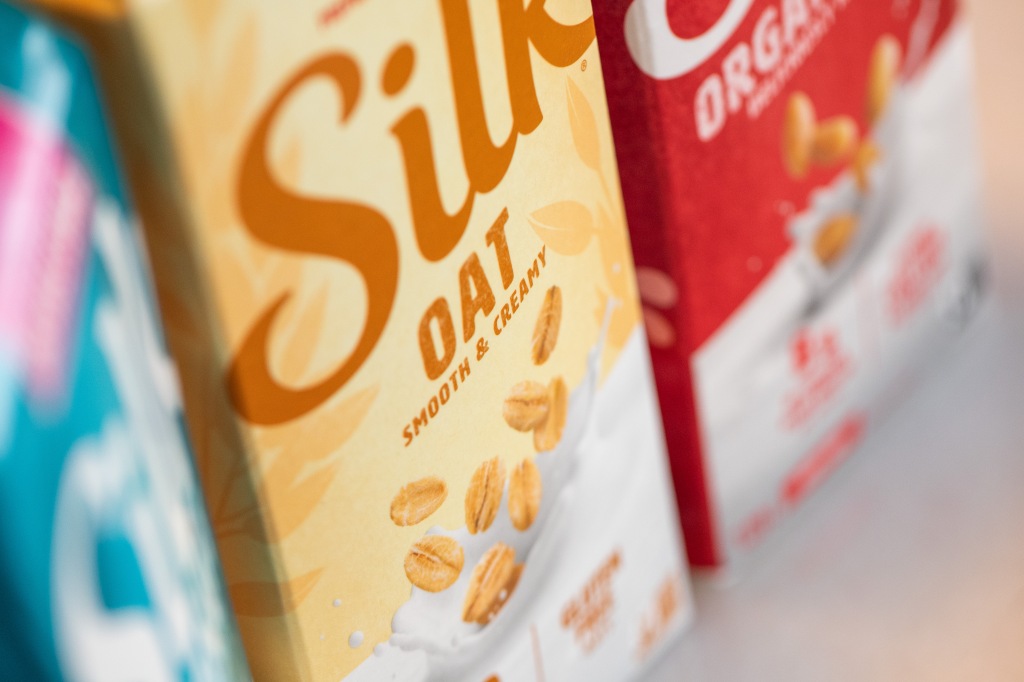
My suggestion: include plant-based milk or creamer whenever coffee and tea are served at catered events. I framed my “ask” first in terms of our institutional sustainability goals. But I went further to argue that, based on my experience, there are a lot more people than vegans who would choose the plant-based option. Lots of people are lactose intolerant or simply prefer the plant-based alternatives. The VP Operations herself, as a matter of fact, said that she prefers to use oat milk. She said she’d consult with our executive chef and see what they could come up with. I followed up with an email later that morning that included some suggestions for single-use creamers and things, none of which turns out to be easily available in Canada (and frankly single-use is not the most sustainable path).
Less than two weeks later, I ran into her again and she reported that it’s happening! They explored options and looked at a sustainability chart for milk and milk-alternatives to discover soy milk as the most environmentally friendly.
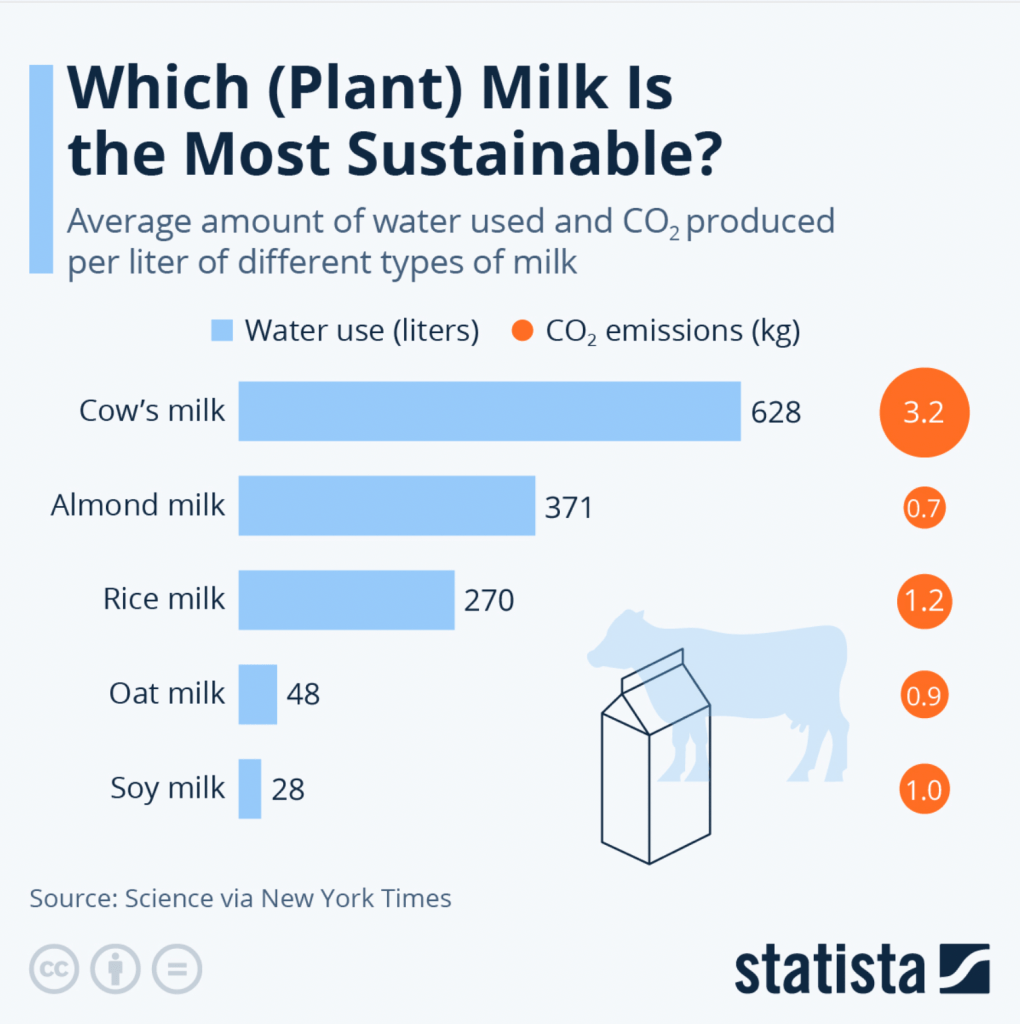
She said they were going to start offering it as an option on all catering orders, and would also put it out as one of the defaults at larger events. Sure enough, yesterday I was at a lunch event and there was soy milk on the coffee table alongside the dairy. (Not only that, but one of the two entrees, not over to the side on a table for “special diets” but right there for everyone to select, was an incredibly delicious tofu and chickpea stew).
What does this show? First thing is, sustainability arguments are an easier sell than cruelty-free arguments. It’s sad how easily animal cruelty is dismissed as “too bad but oh well.” But in these efforts to integrate more plant-based options and fewer animal products, a win for sustainability is a win for animals too. It’s a long and strategic game. The second thing it shows me is that it pays to ask. Within two weeks of my raising the issue about plant-based milk, there it was on the coffee table.
I’ve also since learned that the leaders’ meeting about our sustainability initiatives coming up next week will have a fully plant-based menu. This is really exciting to me — plant-based as the default is something I would love to see more of in the future. The key is to make it delicious so that people can approach the meal without bias. Case in point, I made a carrot cake on Sunday for an event I attended and everyone thought it was absolutely delicious (it was!). When I told one attendee it was vegan, they said, “I’m glad you didn’t tell me that BEFORE I ate it.”
I commended the organizers of the upcoming sustainability meeting in advance for offering the plant-based menu. But I also took it as an opportunity to say that it would be great if we could prioritize our sustainability values even when sustainability isn’t our main meeting topic. My hope is that everyone is wowed by the food and asks for more opportunities to eat that well while also practicing what we preach when it comes to our reputation as a leader in this area. I’ll report back.
Finally, though I have frequently said that animal cruelty reasons in factory farming are decisive reasons to avoid animal products, sustainability concerns have direct and indirect implications for animals as well. If enough people reduce their consumption of animal products, fewer such products will be needed and there will thereby be less overall pain and suffering in the animal agriculture industry. But in addition to that, climate change, to which animal farming is a major contributor, is a threat to natural habitats, thus affecting wildlife world-wide. And of course it threatens the Earth’s live-ability in general, for human and non-human animals, and for the vegetation that is an important part of our eco-systems (not only, but including, the rain forests).
I mention this because reducing our climate impact is in many ways an instrumental goal, not an end in itself, and will have important implications for all of the life that our Earth supports. When I say that the concerns about animal suffering in factory farming are decisive, I don’t mean to suggest that the broader picture of sustainability and the environment isn’t incredibly urgent. Mostly, I mean to say that it’s sad that animal suffering hasn’t been convincing enough. That has allowed factory farming to burgeon out of control to the point where it is a major contributor to climate change and environmental degradation.
This post is meant to inject a sliver of optimism into our efforts. If we can get plant-based milks on the coffee table, first as an option, then as the only option, that is a step in a sustainable and cruelty-free direction.


 Vegan Practically
Leave a reply to Tracy I Cancel reply