It’s a well-known fact that if you tell someone you’re vegan there is a very good chance that they will ask you what you do for protein. People picture a plate. It is divided into three parts; meat or fish, potatoes or rice, and veggies. When you say you’re vegan they imagine an empty third. Maybe that third is filled with more veggies or more potatoes and rice. But where’s the beef?
This lack of imagination often translates over to the side of people—whether those working in restaurant kitchens or home chefs—who are not familiar with vegan nutrition but are trying to prepare meals that are vegan. To be fair, they are making an effort. However, vegans need protein too. So just filling up the empty third with more salad or more potatoes or more grilled veggies, however tasty, doesn’t cut it from a nutritional perspective. A meal without protein is just as unsatisfying for a vegan as it is for an omnivore. It feels incomplete because it is incomplete!
So vegans like and need protein and there is a lot of vegan protein out there. Chickpeas, lentils, black beans and other legumes, tofu, nuts and nut butters, seitan, other soy products like tempeh, grains, and dairy alternatives.
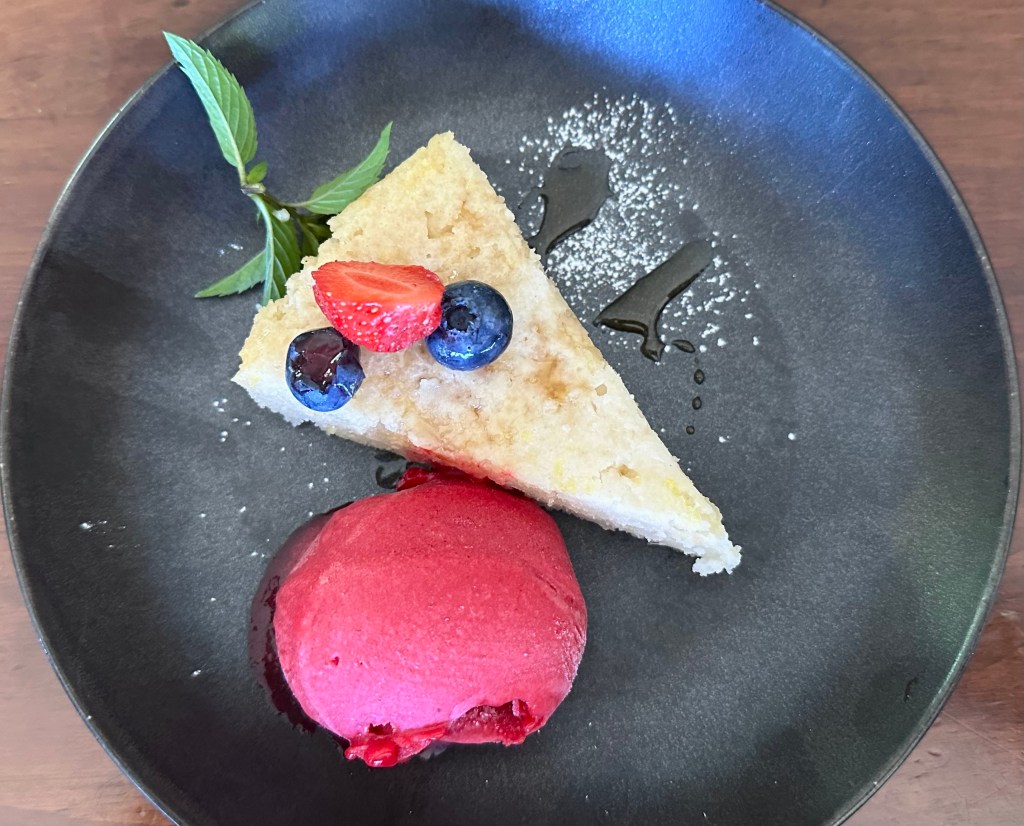
But not all parts of every meal need to be nutritious. And this point brings me to the matter of dessert. If you’re serving a proper dessert, like carrot cake or chocolate mousse, to a group of non-vegans, then why should the vegan option be fresh fruit? Now, I’m not saying there is anything wrong with fresh fruit. What I am saying is that when everyone else is ooo-ing and ah-ing over blueberry cheesecake, the vegans at the table might also be wanting something more decadent than fresh fruit. I mean really. If fresh fruit was a real dessert, why is the rest of the table getting cake?
This goes to the heart of things, which is that as vegan guests we are a big pain in the butt and we are expected to be grateful that any thought at all was given to providing us with options that are consistent with our ethical principles. We are also expected not to say much of anything about why we are vegan. And to politely sit with other people while they eat animal products, which are the products of an industry known to be cruel and environmentally harmful. And for the most part we do, or at least we make judicious decisions about when to say nothing and when to say something.
We do because we don’t want the harsh social consequences of the alternative. I saw an apt meme the other day that showed a vegan riding their bicycle and the caption said something along the line of “I may never be invited back for dinner. But at least now they all know that pigs die in gas chambers.” People don’t want to know this while they are eating dead pigs. The vegan who shares the sad truths about animal cruelty in the food industry is almost guaranteed to experience some level of social ostracization.
If we are going to quietly tolerate people consuming animal products all around us, the least we should be able to get in return is a nutritionally adequate meal that includes vegan protein, and cake for dessert if everyone else is eating cake.


Leave a Reply